


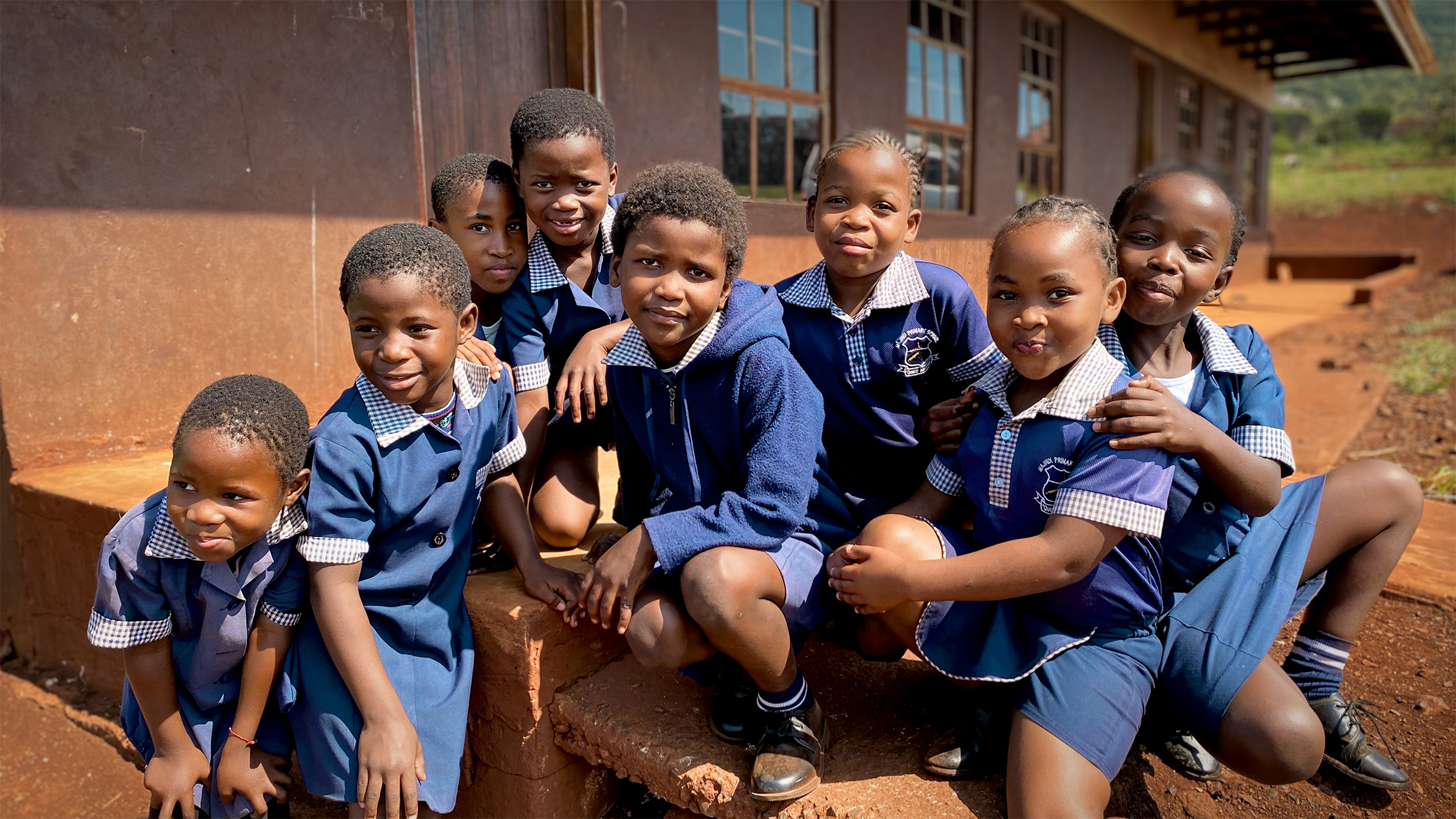
Star for Life was born in 2005 when Christin and Dan Olofsson started a new venture in KwaZulu-Natal, South Africa. They saw how many employees were affected by the spread of HIV and AIDS. This led them to initiate a school programme where children and young people are equipped to avoid infection and to take responsibility for their studies, their dreams and their lives. Over 20 years, Star for Life has helped 540,000 students to improve their health and school results whilst, at the same time, growing globally. Today, we have fundraising activities in Sweden, Norway and Germany and help students in South Africa, Namibia, Tanzania, Ukraine, Jerusalem and Sweden.
Star for Life operates in a regulated sector where the work of the coaches, our scientific evaluations and the responsible use of gifts from companies and individuals are paramount. This is how we have gained the trust to support students in new regions and countries.
When we started in 2005, we were only working in schools in the rural province of KwaZulu-Natal, South Africa but have since expanded, first within the borders of South Africa and later to Namibia, Tanzania, Jerusalem and Ukraine.
To bring unity into an organisation with this kind of growth, we have formed SFL International, a global umbrella organisation with a board led by our founder Dan Olofsson. We also have a management team that supports Secretary General, Jessica Grundström Ahldin, with expertise in research/evaluation, programme development, fundraising, protocol issues and communications. Together we are Star for Life – an organisation that, after 20 years, continues to strengthen students’ school results, health and dreams, in country after country.
This year, Star for Life is celebrating its 20th anniversary. We began the year with an extraordinary partner trip to our roots in KwaZulu-Natal, where we also paid tribute to employees who have been with us from the start. Looking ahead, we celebrated the establishment of Star for Life in Cape Town, where we deepened new and exciting partnerships for a new era. Back in Sweden, the celebration continued with the music party Star Light at Malmö Opera, and in the autumn, we rounded off the anniversary year with a gala dinner at Berns Salonger in Stockholm. We have so much to celebrate – not least that we have been able to support a total of 540,000 students and that we are now active in 173 schools.
During the year, we have consolidated our work and reached more students through our programmes in South Africa. The Mobile Health Unit conducted campaigns during STI and Condom Awareness Week, offered HIV testing and joined the national campaign Close the Gap 1.1 Million. We expanded Daughters of Africa Girls Clubs by starting several new clubs in schools and partnered with H&M South Africa, deepening our work against gender-based violence.
We also launched the Boys Club in Johannesburg, a pilot project that provides a safe space for boys to talk about issues that affect them. Our coaches received targeted training in new manuals and the mobile health clinic team was further trained in HIV testing. The Wellness Unit led child protection campaigns where parents were also involved in our work against sexual abuse.
Our school management teams actively supported the coaches in implementing the programmes, and we witnessed high attendance at teacher workshops. This significant year was also crowned by renewed cooperation agreements with the Ministry of Health and Education.
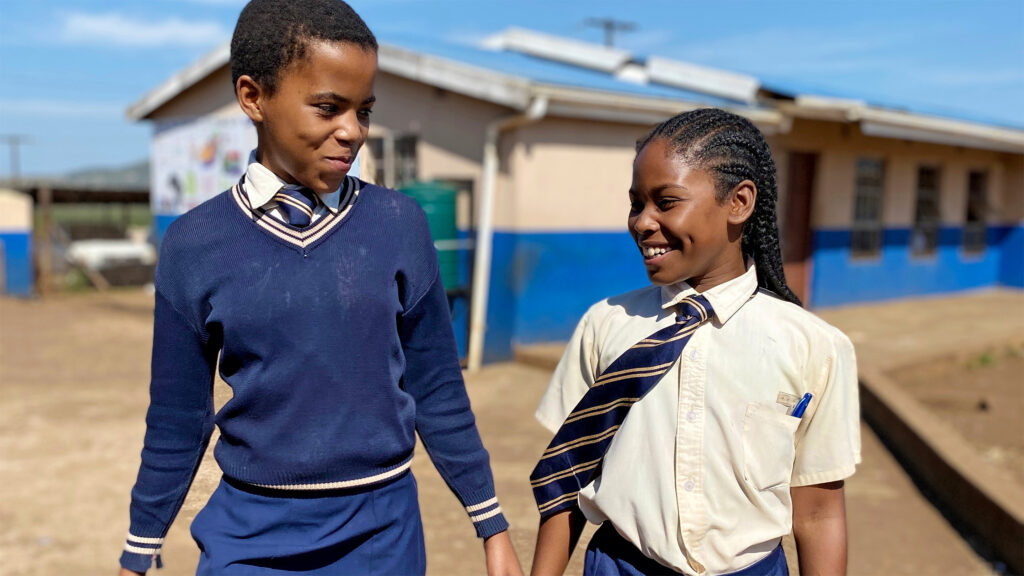
It has been a successful year in Namibia. Our school programmes have had a great impact, Daughters of Africa has continued to empower girls and young women, and the Mobile Health Unit was officially certified as a mobile clinic.
In collaboration with UNESCO, the University of Namibia and the University of Science and Technology, a campaign on sexual and reproductive health and rights (SRHR) was organised with over 120 students. The Mobile Health Unit also carried out campaigns on mental health, reaching over 5,000 students with information on STI and HIV prevention, as well as teenage pregnancy.
Twelve workshops on ethical leadership reached over 400 teachers, Cosmos United became a new sponsor for Cosmos High School, a nurse was hired for the MHU department, and Peace Corps volunteer Jana Richardson gave invaluable support to the work on our programmes. During Wellness Week we collaborated with Old Mutual to strengthen the financial, mental and physical well-being of our staff.
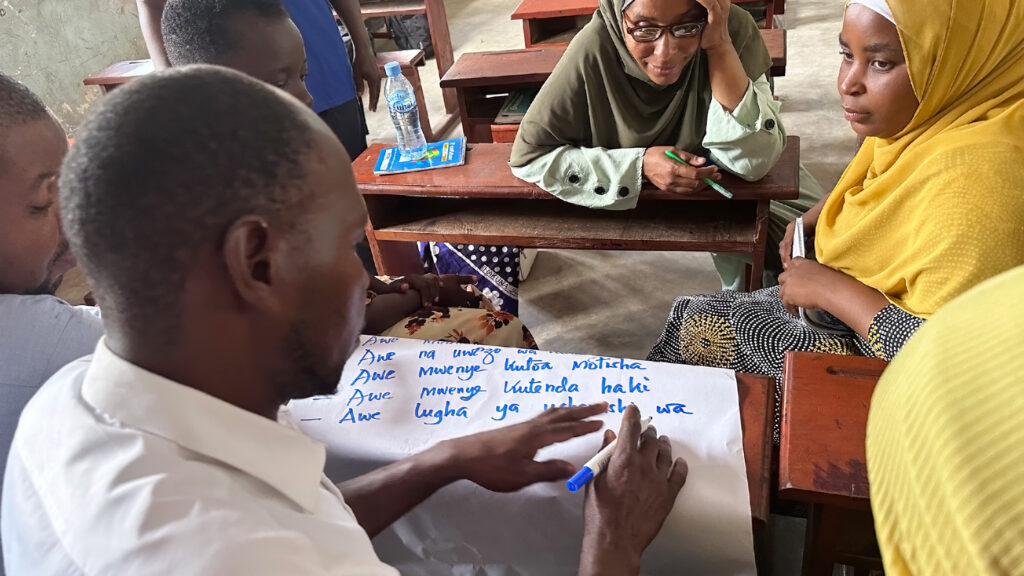
2025 has been a year of progress for Star for Life in Tanzania. Our coaches managed to reach 1,957 students through student workshops and classroom exercises. Our activities in schools have been both inspiring and effective, with active and engaged teachers and students. Teachers in our schools have also been supported in developing their leadership through our workshops on ethical leadership.
Counselling services have been expanded to include parents as a strategy to support students with problems outside the school environment. To reach them, our coaches have begun to actively participate in parent-teacher conferences.
At one of the high schools, we started an agricultural club with a vegetable garden, to provide students with necessary farming skills and, to address the increasing prevalence of sexually transmitted infections among young people, a campaign was carried out on HIV and AIDS.
During the year, our coaches have also been updated on our manuals and the new school curriculum to be able to support the implementation of the programmes in the best possible way.
The year 2025 was a complex and challenging one for Star for Life Jerusalem. We invested significant resources in developing our work and ensuring that it meets the changing needs of the communities in which we operate.
We expanded the school programme to 16 schools and reached approximately 7,000 students through close collaboration with municipalities and state agencies. Demand for our programmes continues to grow and we are preparing for a major expansion in 2026.
Within the labour market programme, we have strengthened partnerships with local actors and created more jobs in Jerusalem. Through conferences and networking meetings, we have opened opportunities for engineers, IT specialists, teachers and healthcare professionals to establish themselves in the labour market.
We have also expanded to more regions and deepened our collaboration with Palestinian, Druze and Jewish communities in vulnerable areas. New programmes have been launched to strengthen the mental capacity of children, parents and teachers.
An important step forward was the meeting between Dan Olofsson and the Israeli Minister of Education, when new collaborations were initiated. By 2026, we aim to establish Star for Life as a national actor that contributes to education, social sustainability and future job opportunities for young people.
It has been a year of recognition and growth for us. We reached the top 10 in the DOU Awards and were nominated for the Osvitoria Award – two prominent awards that celebrate initiatives in technology and education, especially in the context of the ongoing war.
The year began with a major programming competition with over 300 participants, followed by three summer camps. To strengthen our local presence, we opened new tech labs in regions close to the frontline, including Kharkiv and Sumy, bringing the total to eleven Tech Labs.
We launched our ambassador programme and our global Tech Youth Community, connecting 732 young people from different countries. We also implemented a special project with the Children of Heroes Foundation for children who have lost one or both parents in the war, as well as a collaboration with Ystad IF Handball Club that reached over 800 participants in a national webinar.
In the first half of 2025 alone, our programmes reached 4,921 children, giving them important tools for life. In total, more than 25,000 children have participated in our activities, where they have been able to learn, create, and grow.
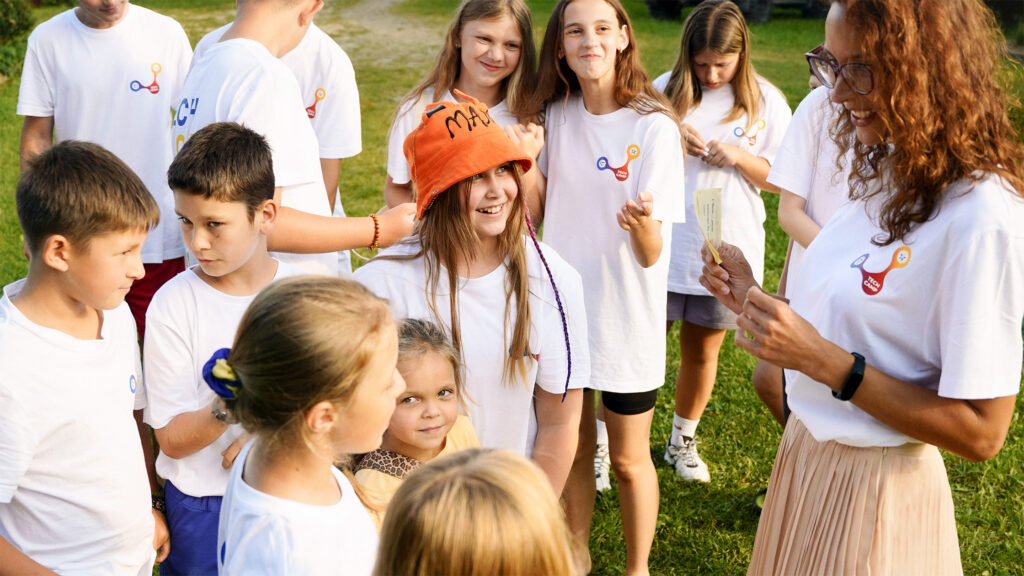
Motivationslyftet’s long-term strategy is to influence school development through evaluation and research, where the effects of our work – both regarding health and motivation – become concrete and clear. Our goal is to ensure that self-leadership training becomes mandatory in Swedish schools and in the training of teachers and principals.
There has been significant growth in 2025 and today we reach around 100 schools in Sweden. Our newly launched preschool programme makes it possible to start training children early, and our work with young athletes continues to grow. We are excited that during the next few years we will start work on materials for Girls Clubs in Sweden.
The work of creating a programme for partner schools is complete and now all schools within SFL International can access materials for valuable exchanges of experience and knowledge with other Star for Life schools.